.png?width=250&height=27&name=AT%20-%20LOGO%20-%20BLACK%20-With%20White%20House%20(2).png "audience-town")
.png)
While everyone else is fighting over digital impressions, the smartest home builder marketers are putting something physical in their buyers' hands, and winning.
A top-50 home builder recently ran a precision direct mail program and here's what happened:
-
27% of recipients came back and took a real action, whether scheduling a tour or returning to the model home.
-
The site revisit rate was 16%, against a 1% industry standard.
-
The cost per re-engaged lead was $14. The benchmark for highly targeted campaigns is $100.
Direct mail never went away. It just got better. And for home builders specifically, it solves a problem that no digital channel can fully address: the buyer who visited your website, liked what they saw, and then disappeared.
Here's why direct mail is becoming one of the highest-performing channels in the home builder toolkit, and how to use it in a way that actually works.
The home builder buying journey is different
Most industries can re-engage a buyer with a retargeted ad. Home builders can't rely on that alone.
The home buying journey is long, often 12 to 18 months from first search to purchase. Buyers go dark for weeks at a time. They research across devices, share decisions with spouses, revisit communities they thought they'd ruled out. Digital retargeting keeps you visible, but visibility isn't conversion.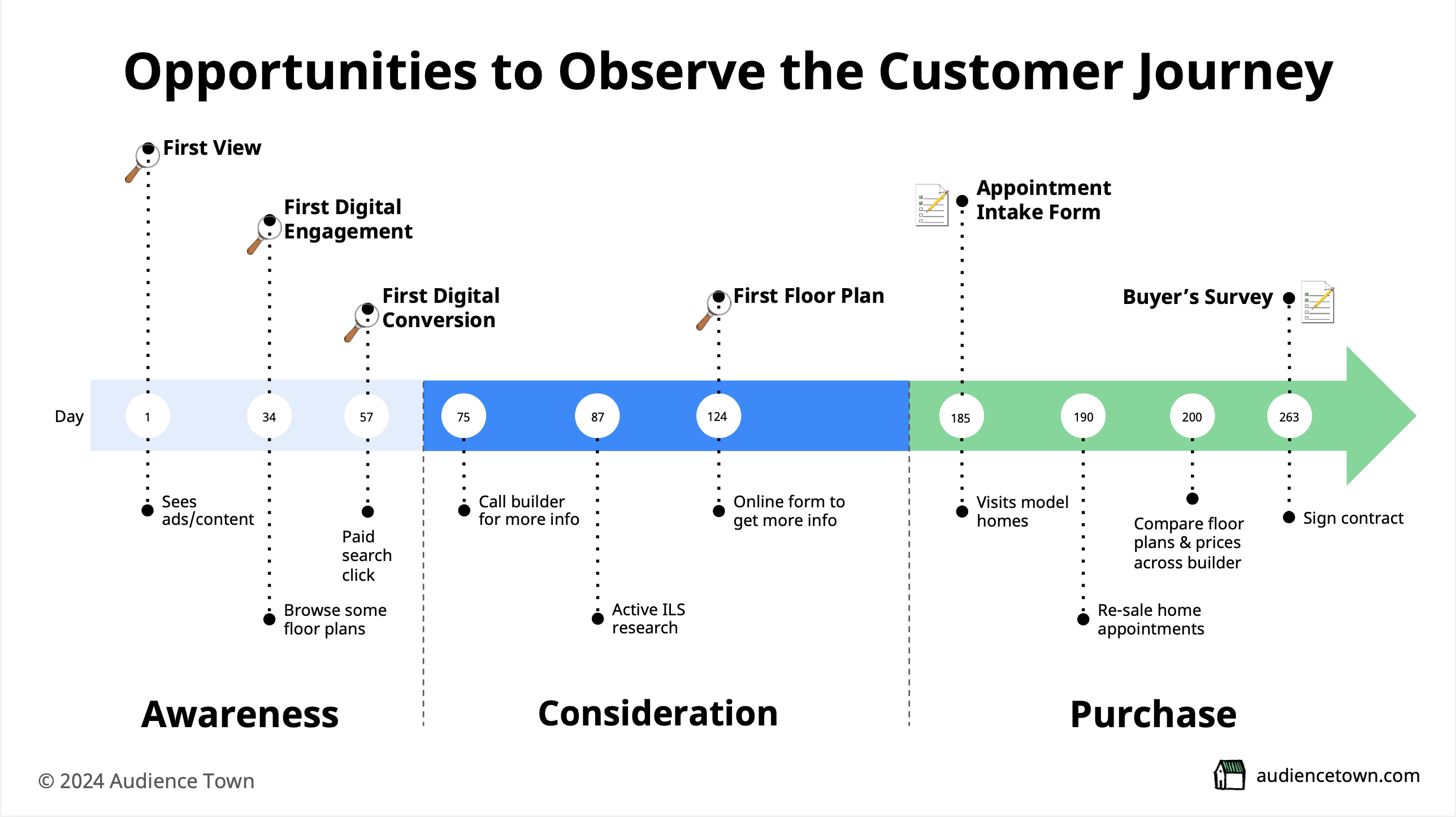
Physical mail is different. A postcard lands in the home. It sits on the counter. It gets picked up by both decision-makers. It creates a moment that no banner ad can replicate: a tangible, physical reminder that your community exists, right when the buyer is ready to act.
That's the opportunity. But only if the right people receive it.
Why direct mail works at the bottom of the funnel
Think about where a buyer is when they're closest to purchasing. They've done the research. They've narrowed their options. They're comparing two or three communities. At this stage, what moves them isn't awareness. It's relevance and timing.
A postcard that arrives when a buyer is in this window, from a community they've already visited online, speaks directly to what they're looking for. That's a conversion tool, not a branding exercise.
Direct mail is the bottom-of-funnel close layer that turns "considering" into "scheduled a tour."
The broader data supports it too. 81% of direct mail recipients take action after receiving a piece. Postcards spend an average of 17 days in the home. The physical format commands attention in a way that a skipped pre-roll never will.
The catch: most direct mail doesn't perform like this
Here's the honest part.
The results at the top of this post aren't typical, not because direct mail can't perform this way, but because most direct mail programs aren't built for this level of precision.
The two most common approaches don't work well for home builders.
-
ZIP code blanketing sends the same postcard to every household in a radius. Most of those households aren't in market. Most who are can't afford the homes. You're paying for volume with no targeting.
-
Unfiltered site retargeting is better, but still incomplete. If you mail everyone who visited your website, you're mailing agents, recent movers, and households that bounced once and moved on. Without filtering for buyer profile, the audience is too broad to perform.
The 1 to 3% QR scan rate that most providers report as a success? That's what unfiltered retargeting delivers. It's not a bad channel. It's an imprecise one.
Precision targeting changes the outcome entirely. When you filter your site visitors by household income, likely mover signal, occupation, and home type and remove agents and recent movers before you mail, what's left is a small, high-intent audience. 90% fewer pieces. 10 to 30% re-engagement rate.
That's the version that produces a $14 re-engaged lead.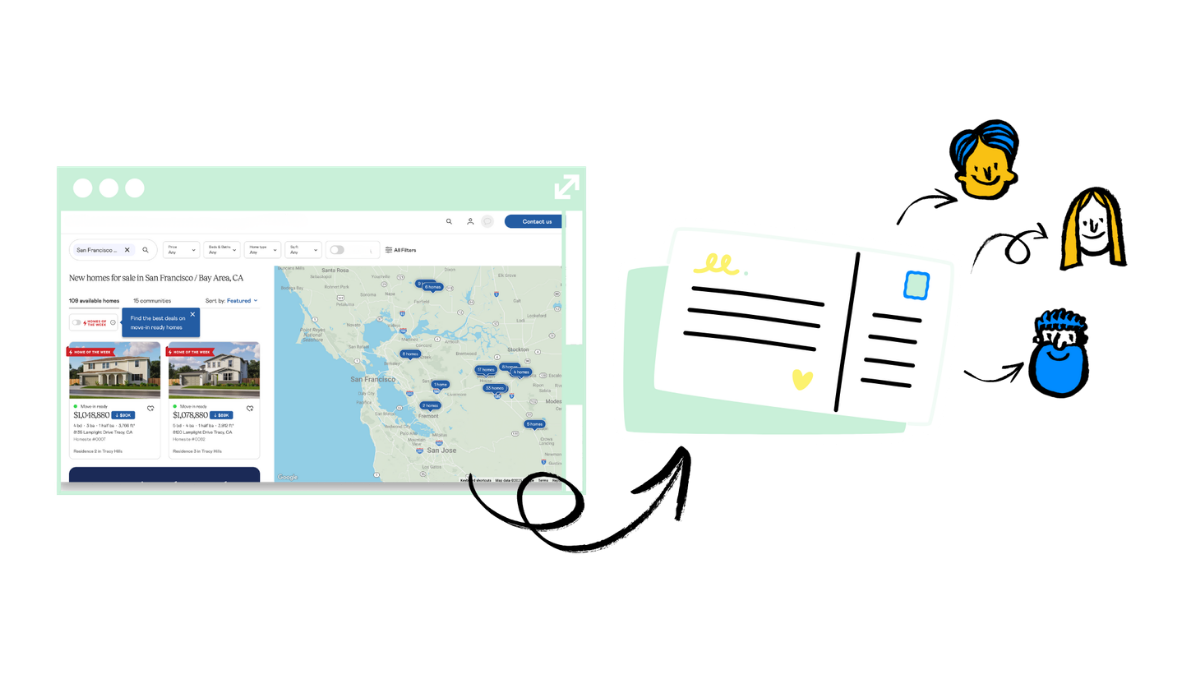
How it fits your existing strategy
Direct mail doesn't replace digital. It completes it.
The buyers in your direct mail audience are the same ones who've already seen your homes on streaming TV, display, and social. Direct mail is the physical touchpoint that converts them after they've been nurtured digitally. Same audience, different format, bottom of the funnel.
For home builders already running awareness and consideration campaigns, adding precision direct mail means you're no longer leaking qualified buyers at the point of conversion. You're closing the loop..jpg?width=1080&height=1080&name=Audience%20Town%20Activation%20Suite%20Graphics%20(1).jpg)
What to look for in a direct mail partner
Not all direct mail platforms are built for home builders. Most are built for e-commerce or general consumer brands, and the targeting attributes that matter for those categories don't map directly to a home buyer's journey.
What makes a direct mail program work for home builders specifically:
-
Buyer profile filtering, not just ZIP code or URL retargeting. FHA-compliance is key. Use filters like home mover signal, home type, occupation.
-
Agent and recent mover suppression. The two audiences you never want to mail.
-
No form submission required. The most valuable buyers often haven't filled out a form yet.
-
Outcome measurement. Not just QR scans, but site revisits and real actions taken.
-
In-platform delivery. So the audience you've already built doesn't have to be rebuilt elsewhere.
When those elements come together, direct mail becomes one of the most cost-efficient channels in a home builder's mix.
The buyers are out there. They visited your website. They're thinking about your homes. They just need one more reason to come back.
A postcard is a pretty good reason.
Audience Town's data-driven direct mail is built exclusively for home builders: precision retargeting from your existing platform data, with real outcome measurement. See the calculator →