.png?width=250&height=27&name=AT%20-%20LOGO%20-%20BLACK%20-With%20White%20House%20(2).png "audience-town")
.png)
If you've been running home builder marketing for any length of time, you already know the basics. Run paid search. Post on social. Send emails. Track form fills. The fundamentals haven't changed much.
What has changed is how much of that activity you can actually see, and what you find when you look closely enough. The marketing strategies for home builders that are producing results right now are built on a clearer picture of the buyer: who they are before they fill out a form, which channels actually introduced them to you, and why the data your CRM shows rarely tells the whole story.
This post covers what's working in 2026, grounded in what the data on home movers actually shows. Not channel theory, but specific patterns that show up consistently when you look at builder marketing with identity-level visibility.
The Customer Journey Is Longer Than Your Funnel Makes It Look
The most consistent finding when builder marketers get real visibility into their data is that the buyer journey is roughly twice as long as their CRM suggests.
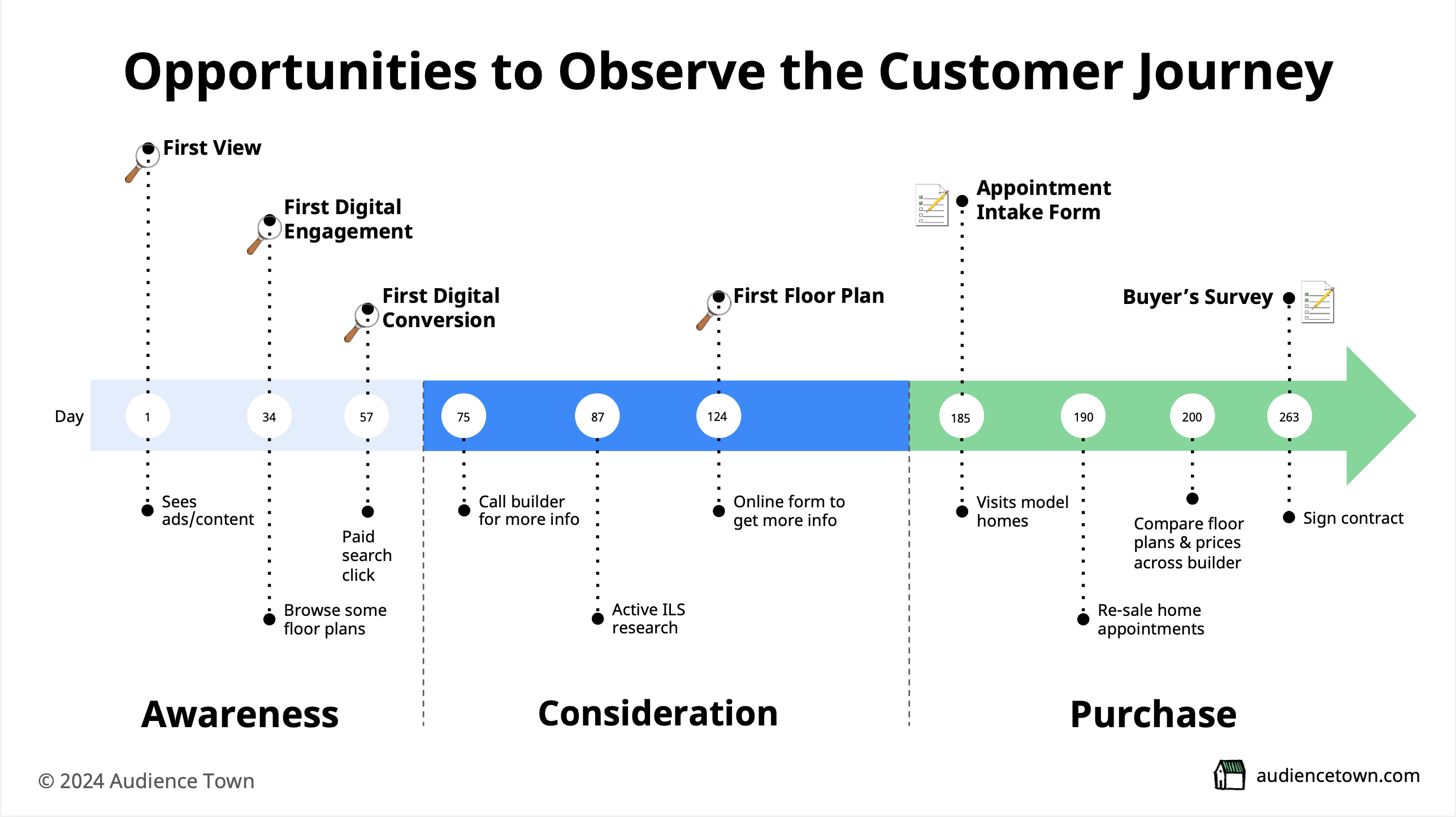
Here's what a real buyer journey looks like, drawn from anonymized platform data:
Awareness (Day 1–57)
- Day 1: First ad view or content exposure
- Day 34: First digital engagement, a paid search click or an organic visit
- Day 57: First digital conversion, browsing floor plans or spending meaningful time on the community page
Consideration (Day 75–124)
- Day 75: First call to the builder
- Day 87: Active research on Zillow, Homes.com, New Home Source
- Day 124: Fills out an online contact form
Purchase (Day 185–263)
- Day 185: First model home visit
- Day 190: Comparing floor plans and pricing across builders
- Day 200: Resale home appointments, still keeping options open
- Day 263: Buyer survey and signed contract
That 200+ day window matters because almost every channel optimization decision you make is based on a much shorter view. If your funnel starts when someone fills out a form on Day 124, you have no visibility into the 124 days of activity that preceded it: which channels introduced them, what content they engaged with, whether paid or organic search drove their first visit.
The practical implication: a buyer who walks into your sales office and says they "just found you on Google" has probably been in your orbit for months. Google got credit for a journey it didn't start.
Your Attribution Data Is Missing Most of the Story
Most home builder marketing teams measure attribution one of two ways: post-sale buyer surveys, or last-touch digital attribution from Google Analytics. Both are incomplete, in different ways.
Buyer surveys capture a fraction of buyers (the ones who fill them out), and people tend to remember the most recent or most obvious touchpoint, often a portal or a Google search. The channels that did the work earlier in the journey, the display campaign that introduced them, the organic search visit 90 days before the form fill, don't show up.
Last-touch digital attribution has the opposite problem. It catches the digital activity but misses offline conversion and overweights the final click.
The graphic below shows both funnels side by side: the left is what acquisition typically looks like based on buyer survey data alone. The right shows the same builder's funnel based on full marketing analytics.
.png?width=960&height=540&name=670f0a5f5fb3f7bd45043871_AudienceTown%20_%20Jeff%20Shore%20-%20FINAL%20(2).png)
The difference is significant. Survey-based data overstates portals and road signs. Analytics-based data surfaces the paid channels, organic content, and early-funnel touchpoints that are actually doing the work. When a builder can see that attribution clearly, budget conversations with leadership change, because the channels being cut are often the ones generating first touch.
One pattern that holds up over time: a large share of traffic attributed to paid search turns out to be returning visitors, not new ones. In one anonymized snapshot a couple of years ago, it was roughly 60%. The exact figure shifts over time and from builder to builder, but the pattern is consistent. You are often paying per click to bring back people who already knew about the community. Not necessarily wrong, but worth knowing, especially if the team is justifying paid search spend on the basis of "new" traffic volume.
This is why attribution is the capability home builder marketers ask about most. It's not a technical problem. It's a budget defense problem.
Paid Search Has an Audience Quality Problem You Can Measure
Standard paid search optimization for home builders focuses on cost per click, click-through rate, and cost per form fill. These are useful metrics. They're also surface-level.
The more important question is whether the households clicking your ads can afford your product. A keyword driving strong click volume from households with income profiles that don't match your price point is not performing, regardless of what the click metrics say.
Audience Town's Analytics platform surfaces household income, credit profile, and homeownership status at the keyword level, so you're optimizing on buyer quality, not just click volume.
When you can see household-level income and credit data matched to actual keyword traffic, paid search strategy often shifts fast. Builders who add this layer routinely find a meaningful share of their keyword spend is pulling the wrong audience, not because the targeting is broken, but because keyword intent doesn't correlate cleanly with buyer qualification.
The fix is straightforward: shift bid aggressiveness toward the terms attracting qualified households, reduce spend on the terms that aren't, and stop relying on your sales team to be the quality filter.
The same logic applies at the community level. If three of your ten communities are receiving heavy paid search investment but their visitor profiles don't match their price point, those communities don't have a conversion problem. They have an audience targeting problem.
Audience Data Changes What You Put in the Ad, Not Just Who You Target
Data isn't just for optimizing spend efficiency. It changes your creative brief.
When you can see the profile of the households most engaged with a specific community, not just demographics but attributes like homeownership status, household composition, interests, and life stage, the messaging writes itself differently.
One builder noticed that 41% of website visitors for a particular community had at least one dog. They built search keywords and ads around an optional pet shower in the mudroom. Appointments increased. The feature was already in the product. The data just told them it was the thing to lead with.
Another pattern: builders who discover that 25% of buyers research for three to eight months before filling out a form use that finding to justify upper-funnel budget. The data makes the case that early awareness spend is doing real work, even when the form fills don't show up until months later.
This is what shifts the conversation from "we can't prove what's working" to "here's exactly what the data shows."
Social Retargeting Works When the Audience Is Right
Most social retargeting for home builders is effectively broad. Someone visited your site, for any reason, from any device, and now they see ads for 30 days. That pool includes real estate agents, your own sales staff, people who clicked by accident, and buyers who are genuinely in market.
The retargeting that moves metrics is narrower: households that have visited multiple times, match the income and homeownership profile of likely buyers, and have been in market long enough to be genuinely considering a purchase.
When you filter to that group and build your Facebook or Instagram audience around it, the same ad spend reaches a smaller audience that converts at a higher rate.
Audience Town's Audience Targeting Add-In lets you filter your website visitors by any of those attributes and push the resulting audience directly to your Meta account. No export, no third-party list broker.
Verified performance from one A/B test comparing standard retargeting to identity-matched retargeting: 87% more active users and 220% more key site events from the matched audience.
The platform mechanics are straightforward. You filter your website visitor data by the attributes that matter for your ICP, build the audience, and push it to Meta. The audience is smaller. The results are better.
For legal compliance: housing category rules apply, and certain demographic attributes (age, income, ethnicity) can't be used as direct targeting signals. The workaround is proxy attributes, things like homeownership status, vehicle ownership, and interest categories, that get you closer to your ICP without running into fair housing restrictions.
Direct Mail Has a Second Life When You Use It Differently
Mass direct mail, 10,000 pieces to every address within a five-mile radius, still doesn't make sense for most builder communities. The economics don't work, and you're paying to reach most people who will never be in the market for new construction.
Targeted direct mail to high-intent households is a different story.
With Audience Town, you identify the households that have visited your website multiple times, match your buyer profile, and haven't yet taken action. At that point, a postcard lands differently. It's not cold outreach. It's a reminder to someone who already knows you.
The re-engagement numbers reflect that difference. Industry-average response rates for mass direct mail run around 1% to 3%.
We see identity-based retargeting mail to high-intent lists sees re-engagement rates of 20% to 30%.
Direct mail campaigns are built and automated inside the same platform as all of your other campaigns. You set the audience criteria, upload your creative, set a monthly budget, and it runs. And at $3-5 per piece for a targeted send versus the CPM math of mass mail, you're sending far fewer pieces to the people who actually matter.
The card sitting on their kitchen table for six weeks is doing something a digital impression can't. It has physical presence during a purchase decision that takes most buyers the better part of a year.
Actionable Insights, Not Just Data
Having the data is one thing. Knowing what to do with it is another.
Audience Town's CTO Jason Scheller explored exactly this tension, how builder marketers can use analytics and AI to get from insight to action, in a panel at the Jeff Shore Marketing & Sales Leadership Summit. Worth watching if you're thinking through how to build this capability for your team.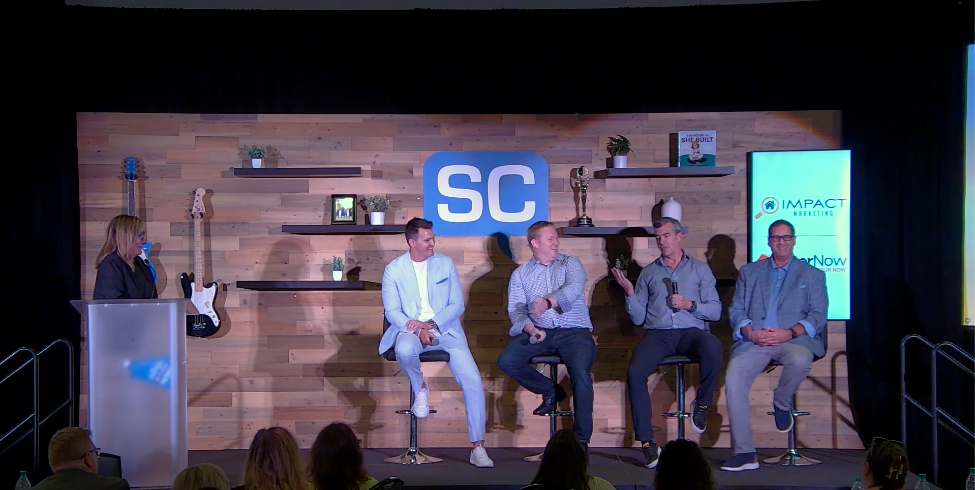
The home builder marketing technology landscape has expanded significantly. Here's how the major solution categories fit together, and where the gaps tend to be.
But if your goal is spend more of your marketing budget connecting with and converting with the folks who are most likely to buy, then you need to give Audience Town a look.
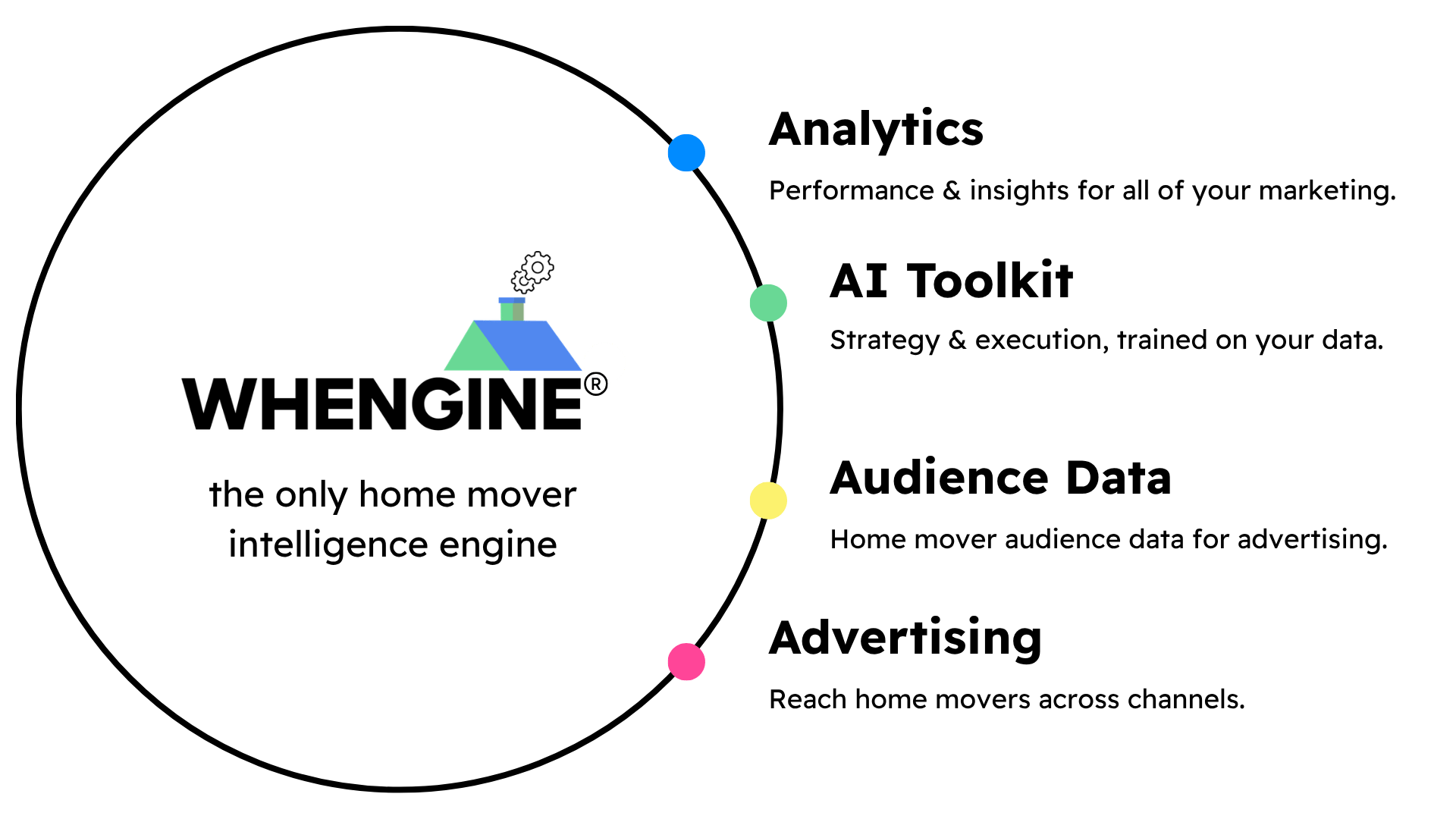
Audience Town is the only AI marketing platform that makes it easy to reach home movers, with Analytics, AI Toolkit, Audience Data, and Advertising in one place. At the core of our platform is the Whengine®, the only home mover intelligence engine. Whengine® is built on the #1 superset of consumer and property data covering 280M US adults and 120M households to identify who is moving where, why and when.
See how it works.
Every customer gets a dedicated customer success manager who shows up proactively with what the data means, not just a dashboard to log into.