Transcript
The first time builder marketers see our data, the question is almost always the same. How do you actually know this?
It's a fair question. Most analytics tools count browsers and devices. Sessions, clicks, page views. Useful, but anonymous. You're guessing at who's behind the screen.
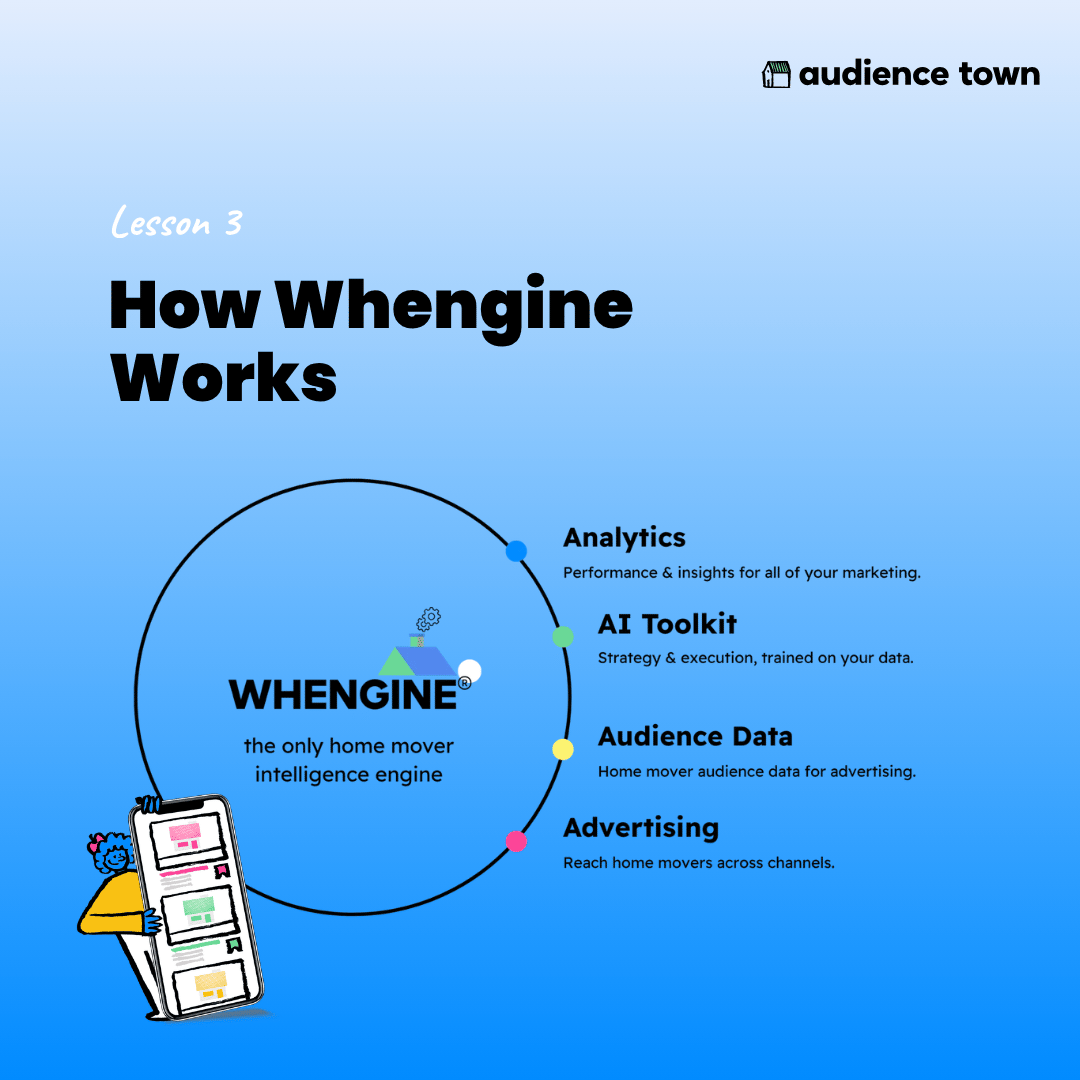
Whengine works differently. We identify the household, not the device.
Here's how it works. When someone visits your website, our pixel captures signals from that session. Then Whengine matches those signals against the biggest consumer and property dataset out there. 280 million US adults. 120 million households. The match happens primarily on phone number and address, with other signals as backup.
Once we find a match, we attach what's already known about that household from real sources. Tax assessors. Credit bureaus. Municipal records. MLS data. Verified third-party information, not guesses.
Two things to know about how this works.
First, the match rate. Depending on the signals we have, we typically match between 60 and 90 percent of your traffic. Some sessions can't be matched, and that's fine. We don't pretend we can match someone when we can't.
Second, the never-guess rule. If we don't have verified data on something, we don't display it. If we don't know a household's home value, we won't show one. If we can't confirm credit score, that field stays blank. Nothing in this platform is made up.
This is the foundation under everything else you'll see. When you look at your Live Table and notice that paid search traffic skews toward a certain household income, that's real income data attached to real households. Not modeled. Not estimated. Verified.
It's also why our numbers tend to feel more trustworthy than what you're used to.
Next, we'll get the vocabulary out of the way so the rest of the platform makes sense.
- Match rate: 60–90% of traffic
- Never-guess rule: blank fields stay blank
- Fewer numbers — but the right ones
.png?width=250&height=27&name=AT%20-%20LOGO%20-%20BLACK%20-With%20White%20House%20(2).png "audience-town")